 The Research Data Management Forum, hosted on 20 May 2026 and moderated by Matt Cannon, Associate Director of Open Science Programmes at Taylor & Francis brought together experts from academia, publishing, research infrastructure, and funding organizations to discuss evolving practices in research data management, open science, and data sharing. The discussion highlighted the importance of making research data findable, accessible, interoperable, and reusable (FAIR), while addressing challenges related to policy implementation, monitoring, compliance, and long-term preservation.
Key Themes and Insights from the discussion included,
Advancing Open Research Through Better Data Sharing
Participants emphasized that effective research data management is fundamental to open science. Institutions, publishers, and funders are increasingly requiring researchers to share data and provide clear data availability statements. However, measuring compliance and assessing the true openness of research data remains challenging due to inconsistencies in reporting and metadata practices.
Institutional Support and Measurement Challenges
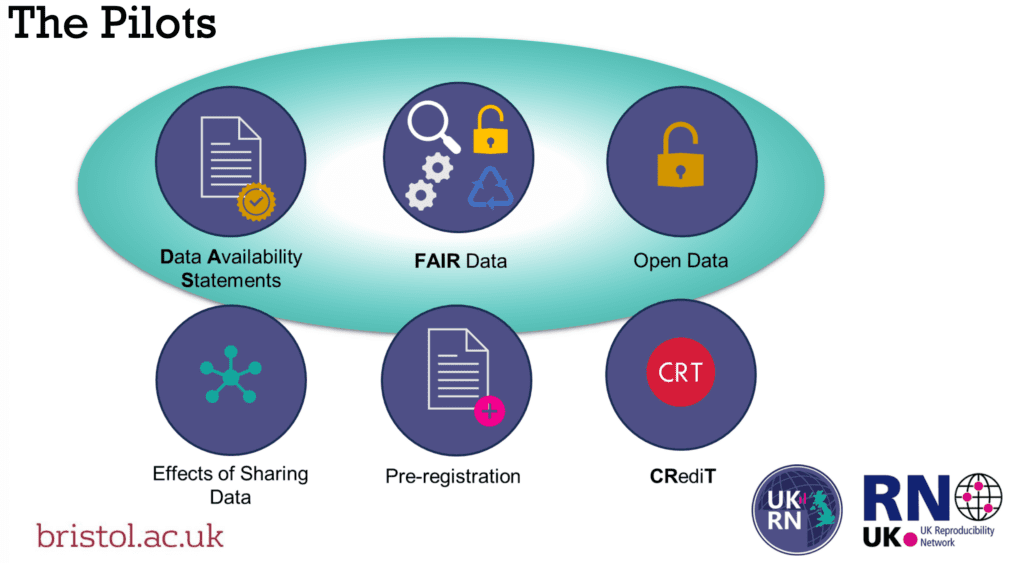
Kirsty Merrett, Research Support Librarian of the University of Bristol described the university’s comprehensive research data management services, including training, data management planning, storage guidance, open and sensitive data release, and disclosure risk assessments. She highlighted findings from the Open Research Indicators Pilots, which sought to measure the FAIRness of data, Openness of data, and the prevalence and quality of Data Availability Statements. The Openness of data pilot encountered difficulties in accurately extracting and interpreting data availability statements across publications.
Global Open Science Monitoring Efforts
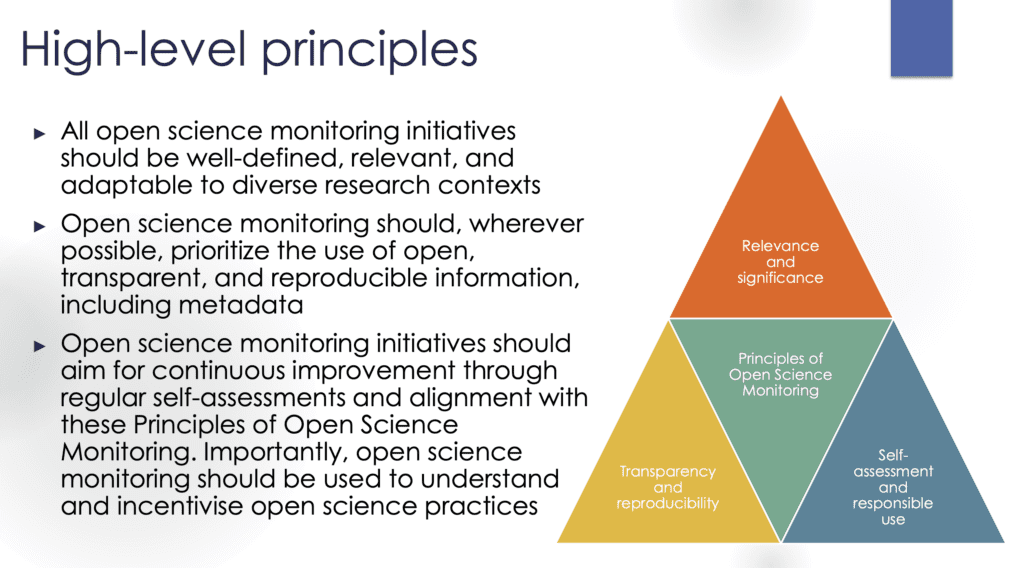
Laetitia Bracco, Deputy Head of Research Support Services – University Libraries, Université de Lorraine and Chair of the OSMI Coordination Committee presented the Open Science Monitoring Initiative (OSMI), an international effort to establish common principles and technical recommendations for monitoring open science activities worldwide. OSMI promotes transparency, reproducibility, self-assessment, and responsible use of metrics, providing a framework for stakeholders to evaluate progress and identify barriers to open science adoption. The initiative has attracted significant international engagement and collaboration. She also presented how the French Open Science Monitor is tracking research data sharing practices.
Publishers’ Role in Data Policy Compliance
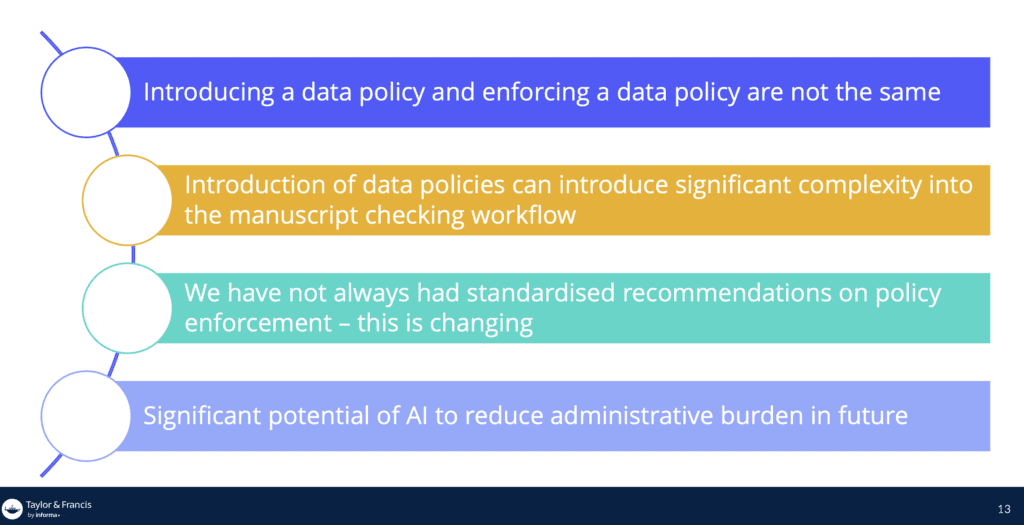
Rebecca Taylor-Grant, Director of Open Science Strategy & Innovation at Taylor & Francis discussed how publishers are increasingly responsible for ensuring that authors comply with data sharing requirements. She outlined the Horizon Europe-funded TIER2 project, which developed practical guidance, editorial workflows, and compliance checks to strengthen journal enforcement of data policies. She also highlighted the growing potential of artificial intelligence tools, such as Data Seer, to automate data checks and provide tailored guidance to authors, improving efficiency and consistency in the publication process.
UKRI’s Evolving Research Data Policy
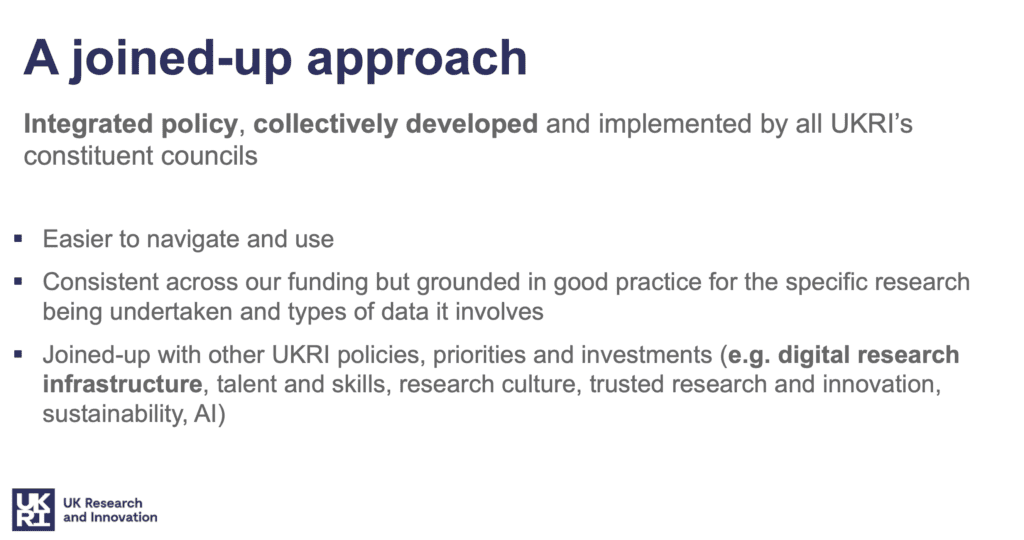
Elizabeth Newbold, Open Science Theme Lead at STFC (UKRI council) described the United Kingdom Research and Innovation (UKRI) effort to modernize its research data policy. The revised framework aims to establish consistent expectations across disciplines while recognizing domain-specific needs. Key priorities include promoting FAIR data principles, supporting responsible data sharing, encouraging the use of persistent identifiers and trusted repositories, and ensuring long-term preservation of research outputs. The policy is being developed with a focus on fairness, transparency, and sustainable implementation, with rollout expected to begin around 2027.
Key Takeaways:
⇒Research data management is a central component of open science strategies worldwide.
⇒Data availability statements and open data metrics remain difficult to standardize and measure reliably.
⇒International initiatives such as OSMI are working to create common frameworks for monitoring open science progress.
⇒Publishers are expanding their role in enforcing data-sharing policies and exploring AI-enabled compliance tools.
⇒Funders such as UKRI are updating policies to strengthen FAIR data practices, long-term preservation, and responsible sharing.
⇒Trusted repositories, persistent identifiers, and sustainable preservation infrastructure are increasingly viewed as essential for ensuring ongoing access to research data.
Conclusion
The forum demonstrated broad consensus that effective research data management is critical to advancing open science. Success will depend on coordinated efforts among researchers, institutions, publishers, funders, and infrastructure providers to improve data sharing practices, establish meaningful monitoring frameworks, leverage emerging technologies, and ensure the long-term stewardship of research data.
We would like to thank our sponsors for their continued support of CHORUS Events. The recording and presentations can be found on the event page.