 The CHORUS Forum Accessibility: How’s It Going hosted on 23 March 2026 brought together over 100 stakeholders from the scholarly research community to discuss the evolving landscape of accessibility. The forum specifically addressed new mandates and the practical challenges of implementation.
A Shift Toward Universal Design
Moderator Nicola Poser (American Mathematical Society) opened by highlighting the industry’s transition from a reactive model—where publishers responded to early remediation requests (like Braille)—to a proactive, conversational model centered on Universal Design.
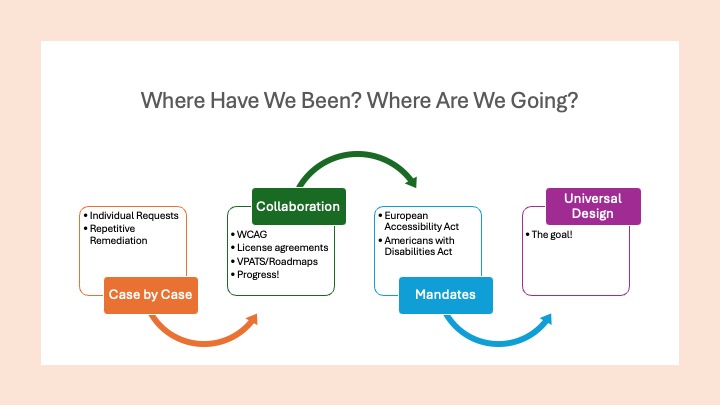
Image 1. Where Have We Been? Where Are We Going?” with a diagram summarizing the progression from case-by-case accessibility fixes, to collaboration and mandates, toward universal design as the goal.
- New Mandates: The European Accessibility Act (EAA) and updated Title II of the Americans with Disabilities Act (ADA) are shifting the focus toward compliance with WCAG 2.1
- A goal is to move the onus of accessibility from the individual to the content creators at the source.
Key Speaker Perspectives
-
The User & Systemic Barriers
Brittni Ballard (Learning Technologies Librarian, Towson University) emphasized that accessibility “breaks across an entire system,” not just in one place.
- Usability vs. Availability: It is not enough for a document to be available; it must be usable and accurate.
- The AI Factor: While AI can assist with alt-text and captions at scale, it cannot yet replace human judgment, especially for complex scholarly research.
- Responsibility: Accessibility is often stuck in a “nebulous gap” between those who do the work and those who make the decisions.
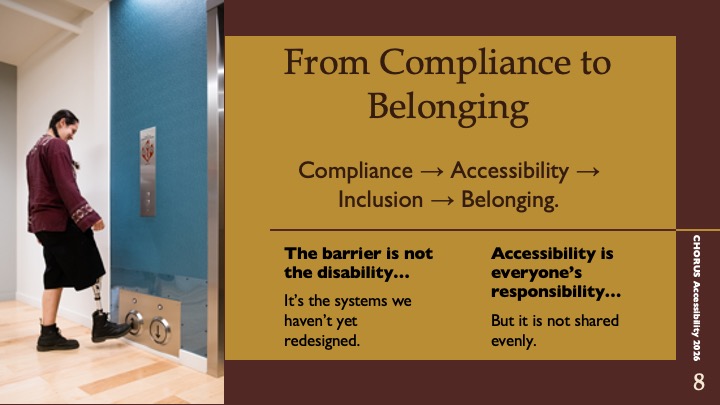
Image 2. An Indigenous Two-Spirit person calls the elevator up by tapping the floor button with their prosthetic leg.
-
Disciplinary Challenges: Mathematics
Kivmars Bowling (Publications Director, SIAM) discussed the unique hurdles of making mathematical content accessible.
- Collaborative Guidelines: Four major math societies (AMS, EMS, LMS, and SIAM) launched joint accessibility guidelines in January 2026 to create a “born-accessible” culture.
- Technical Standards: The focus is on moving beyond WCAG 2.1 to 2.2, utilizing LaTeX or MathML for equations, and training authors to write concise, meaningful alt text.
The following alt text example was shared –
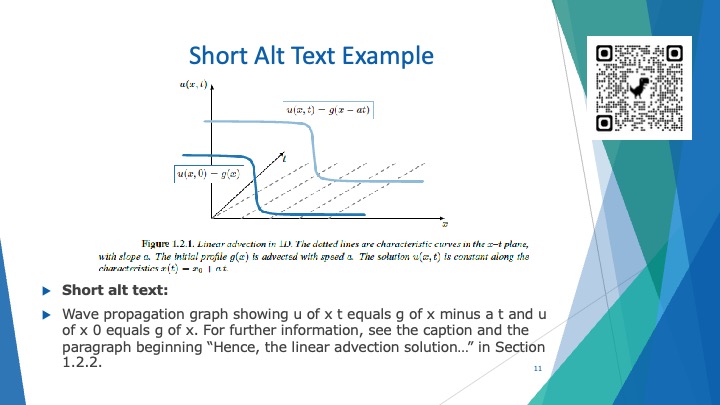
Image 3. Wave propagation graph showing u of x t equals g of x minus a t and u of x 0 equals g of x.
-
Library-Vendor Workflows
Elyssa Gould (Interim Assistant Dean & Head Acquisitions and Continuing Resources, University of Tennessee, Knoxville) shared a successful three-pronged approach to vendor management:
- Documentation: UT requires a VPAT (Voluntary Product Accessibility Template), a Product Accessibility Roadmap, and an EEAAP (Equally Effective Alternate Access Plan) for licenses.
- Impact: Through this rigorous testing and feedback loop, 77% of vendors incorporated actual accessibility improvements within one year.
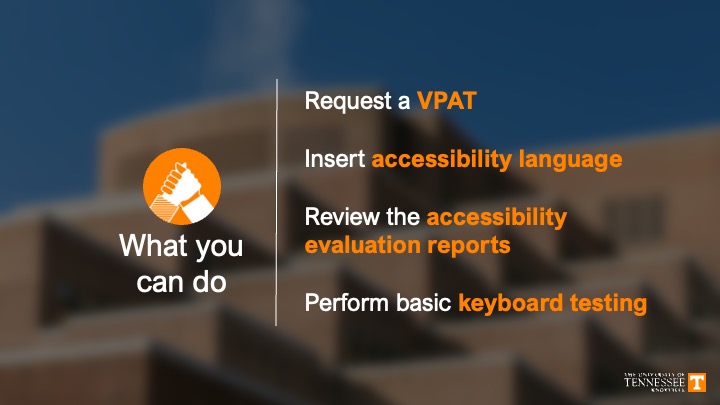
Image 4. Steps you can take to make sure your vendors are helping support accessibility.
-
Strategic Investment & Technical Standards
Dana Compton (Managing Director and Publisher, Publications & Standards, ASCE) addressed the difficulty of convincing boards to fund accessibility.
- The Argument: The most effective pitch is that “inclusive science is better science”.
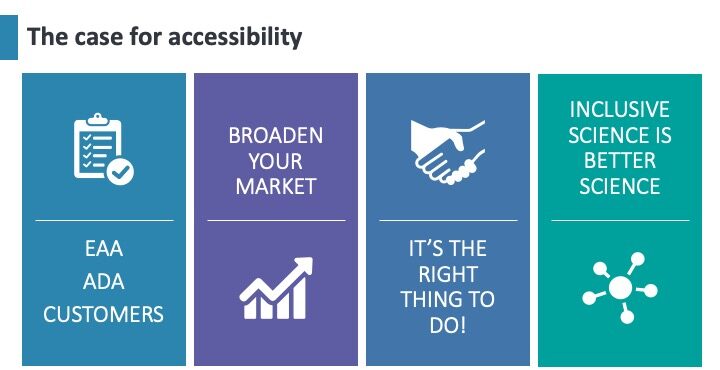
Image 5. Steps you can take to support accessibility.
- Standards Hurdles: For Standards Development Organizations (SDOs), accessibility is complex because standards are balloted by consensus; adding alt-text to thousands of images in a standard presents a “disproportionate burden”.
Key Takeaways & Conclusion
The panel concluded that accessibility is a spectrum, not a binary “compliant or not” choice.
| Licensing | Use reasonable language (“commercially reasonable efforts”) rather than impossible guarantees. |
| Alt-Text | Focus on the “key takeaways” of a figure rather than describing every pixel. |
| Collaboration | Publishers, librarians, and authors must work together to create an “accessible-first” culture. |
SPONSORS
Resources
A list of Accessibility Resources can be found here (https://www.chorusaccess.org/accessibility-resources/).
We would like to thank our sponsors for their continued support of CHORUS Events. The recording and presentations can be found on the event page.